Monday, May 28, 2012

MGT, Cooking, and the Original Woman

Note: Throughout this piece, I am using the phrase MGT to denote any training women have engaged in for their growth and development as it relates to the maintenance of the home.

These past few years, I've been deeply immersed in the culinary arts. It has not always been this way. I grew up watching my mother prepare food. Food was always around me. As I grew older, I didn't quite successfully undertake my responsibilities as the young lady of the house. Gender values were passed down and acquired by the women in my family through generations of assimilating into the dominant codes of the Christian Spaniards that lived and survived through the ideas of my people, who represented a myriad of shades as a result of Moorish/Christian/Taino/West African influences. While I was proudly living up to this standard it was not in the traditional Dama sense, but rather through the feminist liberal Anglo-Saxon ideology of the women of the United States. To me cooking represented oppressive domestic affairs. It represented a form of slavery brought by gender constraints that women lived by. I saw my mother every evening being demanded of and yelled at if food wasn't ready. Her passively answers of reassurance was all I remember. Thus, I rejected it all together. Among many other personality traits, which are deserving of their own blog, it garnered me the phrase of "el hombresito de la casa." 

Through the years, as I grew comfortably into my womanhood and unveiled myself of some of my older ideas, I came to understand cooking not as a mandatory requirement of wife duties, but rather as an art to discover part of what womanhood is about. Through cooking, you are revealed an aspect of who you are as a woman. Within the 120 lessons of the Nation of God and Earth, the 14th degree of the 1-14 set, states
"What is the meaning of MGT and GCC?" 
The answer states, "Muslim Girl Training and General Civilization Class. This is the name given to the women and girls of Islam in the wilderness of North America. Teaching them: How to keep a home, How to raise their children, How to keep their husband.  Sew, cook, in general, how to act at home and abroad."  
This degree mentions the main duties that a woman dealing with Islam, as a non-mysterious concept, should have mastered and ultimately possess as qualities.  MGT and GCC simply detail the skills that a young woman develops all throughout the course of her years prior to establishing a relationship with a man. Man and Woman are extremely similar creatures, yet they are each born with predominant traits that are correspondent with their gender. The myth that gender norms are socialized and made up, thus concluding with the idea, that each individual should define their gender how they want to live it, is partly erroneous. Obviously, people will express their femininity and masculinity in unique ways that befit them. However, their dominant gender, naturally received through birth, will inform who they are.  Gender goes in accordance to the universal laws of the mind and nature. The corresponding traits to gender are ones that are beyond time and space. Tehuti, one of the most prominent ancient figures we learn through our ancient history, articulated the laws that govern the universe and Earth. These laws are neither bendable nor can be dis-proven, they simply just are and have no beginning or ending, even when we don't see it with the physical eye. Of the 7 universal laws, one is the Law of Gender. This ancient principle details the manifestation of both genders in all things. Examining this law one will learn that masculine and feminine are not necessarily opposites, but rather are interrelated shades of gender, where people manifest aspects of both in all they do while one has a more dominant role than the other. Even something as masculine as a punch contains both elements of gender. When one throws a punch it is the force used that represent the yang (masculine) aspect. Simultaneously, it is the grace and sharpness used to give the strike shape, that represents the yin (feminine) aspect. One can see that even in movement this principle is present, that without it creator and creation it would not exist. The law of gender also plays out in the Human form as man and woman. Each being is composed of one another, but have predominant traits, that uniquely make them who they are and how they functional within the planet Earth. Man and Woman have been in tune with one another. While man's nature is inclined more towards the heavens, woman's nature is connected more to the world/Earth. Dr. Charles S. Finch has stated,
 "Farming was almost certainly a female invention; it strengthened and amplified the matriarchy while materially and symbolically enriching it."(1)
Vandana Shiva, an eco-feminist (a feminism not in adherence to white woman ideology, but rather one that goes in accordance with man and masculinity because nature herself is made up of activity and creativity, the former representative of man, the latter of woman ) wrote in her exemplary research,
"Nature and women have historically been the primary food providers in natural farming, based on sustainable flows of fertility from forests, and farm animals, to croplands...Women were the world's original food producers, and continue to be central to food production systems in the Third World..."(2)

It is no coincidence that notable scholars' work has revealed to them the idea of woman being intimately connected to nature at such an extent that it is truly the original woman who embodies historical roles of innovation that are directly related to the Earth. Indeed, the feminine principle is one that correlates with the woman. It makes sense that women are naturally drawn to work that is related to the planet. These traits then become embedded into the society as the predominant role of woman. What we call gender norms and roles. It doesn't mean she cannot do anything beyond that, but these must be mastered before moving onto other endeavors. This is the ideology upon which MGT is rooted. It is neither a sociological construction, nor an adaptation based on one model. It is simply the application of an irrefutable truth based on science and mathematics that are not theory based to measure part of the whole.  Rather, it is based on the subjective study of the original Black man and woman, reflections of thought and nature, father and mother of civilization. MGT then are the tasks that naturally continue to develop since the original woman's existence. As civilization expands along with dissatisfaction(3), women's work become diluted through  linear mentality that has guided European society since it's formation. Women's main roles become constricted to only the most obvious, of which are house duties and food.

European women learned the arts of food because to be a good wife meant knowing about different types of cooking styles, as well as going to the market to shop for meat, vegetables and fruits. A woman successful at marriage was one that knew how to bake, stew, and shop for food.  I know this specially to be true for the half original Spaniard criollos living in the Americas.  Of great reference to illustrate this point, is the famous telenovela Corazon Salvaje, set in colonial Mexico, where the two main characters in their conversation, specifically discuss a woman's role in the household and society at large.
Juan: ¿No me digas que te metiste a la cocina?
Monica: ¿Por que te extraña?
Juan:  ¿Sabes cocinar?
Monica: Claro que si.
Juan: ¿Esto que es?
Monica: Miel de Buen dulce.
Juan: ¿Estara bueno, o en vez de azucar le hechaste sal?
Monica: Juan, si se hacer de comer.
Juan: Bueno, haber que tan buen cocinera eres.
Monica: Si, enseguida....
...
Monica: Tambien se hacer mermeladas, curtidos, licores...
Juan: ¿Donde aprendiste? ¿En tu casa o con las monjas?
Monica: En los dos lados.
Juan: ¿Que mas sabes hacer?
Monica: Bueno, se coser, bordar, hacer las compras. Tambien toco el piano y hablo un poco de Frances.
Juan: Es decir, todo lo que una buena esposa debe saber.(4)
This shows the Europeans had their own versions of MGT, where being a woman translated into the many qualities that she was able to develop. As in Monica's case, she grew up fostering the skills that would make her a successful wife. She knew how to take care of her home by cooking, shopping, sewing and embroidering. She was also expected to reflect her womanly prowess by developing entertainment skills, as well as others that would show she was somewhat worldly.  This meant either knowing an aspect of the arts (singing, playing an instrument, or dancing) and the spoken word (adequately carry a thought-provoking conversation).  The second component of the woman's preparation is exactly what is meant by "how to act at home and abroad" in the 14th degree.  Behavior and level of involvement in different ciphers was a reflection of the mastery women had in exerting themselves dependent upon the climate and conditions of the occasion. Women would exert their talents at gatherings at the request of the guests. All of this was achieved through years of schooling and preparation, which meant that it was also dependent upon class.  Women that were worthy of marrying were usually chosen from the upper classes.

The idea of MGT learned through institutionalized schooling, reminds me of the Geisha's in Japan. Geisha's were mainly poor peasant girls that when orphaned, or whose parents were unable to care for, were sold to a Geisha house in Japan's cities. If the lady of the house saw fit, the girl would either be a servant or go to school to become a Geisha. At the schools, the girls would learn the art of dancing, singing, instrumental music, hygiene, and literature. Erroneously, Geisha's have traditionally been viewed as escorts or prostitutes, when in reality, they were extremely intellectually skilled entertainers. Due to their disposition as women, the topic of sex must be discussed.  How did these women incorporate this into their lives? The only time this would happen is to sell their virginity, which occurred because it was the only time a Geisha was able to make the most money in her lifetime. They did this did to pay their debt with the ladies of the house, who had bought them and paid for their schooling. It was in this way in which a Geisha would pay her "Mother" back. This is where the confusion of the Western world lies. The entire process occurred through outlined principles/rules that retained the morality of the women involved. In the movie, Memoirs of a Geisha, Michelle Yeoh's character says to her young apprentice,
"Remember Chiyo, Geisha's are not courtesans and we are not wives. We sell our skills, not our bodies. We create another secret world, a place only of beauty. The very word Geisha means artist. And to be Geisha is to be judged as a moving work of art."(5) 
Although Geishas did not become wives, as they were not allowed to marry, they did possess the qualities that would make a great wife. This is why eventually each Geisha, depending how strongly she exerted her skills, would receive the economic protection of a sponsor. He would provide her with food, clothing, and shelter. Again, we must understand the social context of these ladies. They were poor and this was the best available option at growing decently. It really was MGT for the poorer women of Japan.

The confusion lies with the transferring of MGT in the European context. It is here where MGT takes on a shape that is exclusive and oppressive. Instead of viewing MGT as the qualities that women are most naturally in tune with because of their natural connection to the Earth, literally the personification of the planet, in Europe MGT becomes more of the "obligations" that women must comply with. Men set the guidelines for what MGT meant. This means the MGT was incomplete because it confined the woman through an appropriate freedom where her mind and thoughts were not appreciated beyond the home. The white man applied gender without balance. The woman was to be dominated and not allowed to contribute to the growth of society. This condition subjugated the woman to the home and did not allow her to develop other aspects of her being.  As Juan told Monica,  
"Por supuesto que una mujer debe saber cuidar su casa...pero eso no es todo...que ademas de ser esposa es mujer, un ser humano que piensa, que puede opinar, decidir." 
To this Monica answers, "A mi me han enseñado que la mujer debe de ser prudente, obedecer y acatar la ordenes del marido." 
 Juan then replies, "¿Y si no estas de acuerdo? ¿Supongamos que yo ordeno algo que esta equivocado, que harias?...No quiero una esclava, si no una mujer. Asi que pelea, discute, di lo que sientas...No se te ocurre que podrias convencerme?" (6)
Although women of high rank in Europe had exemplary skills and their own MGT preparation, they experienced a strong societal oppression, where their thoughts and ideas were not taken into consideration.  They had no rights in terms of owning property or being involved in other aspects of society aside from the home. In other words, in matters outside the home, the woman had no power(5) that could extend the culture(4) of the home into an equality(6) of who she was to the man(7). Meaning, a true equality of who she was to man could be achieved allowing the interaction of gender to play out, where the culture would exert its power precisely by allowing an interchange in different situations that dealt with inside and outside of home and were carried by either husband and wife and not limited to a box that kept each gender there. Juan, of course, was the exception to other caballero men.  He had grown up poor and this had given him the understanding of equality not only of classes, but also of gender. He saw the woman as an equal counterpart, rather than a secondary inferior sex. The European experience of MGT is the teaching of a role confining the societal state of women as people that were to be treated as the possession of the man. Her sole existence was her duties in the home of which the main one consisted bearing of children. It was a customary in European culture for the man to solely marry with the purpose of using the wife just to conceive. Her sensuality rarely developed. It was common practice for the husband to release his sexual needs with a mistress that dependent upon the situation, would either live with husband and wife or in a home relegated for her use. The white woman was to be dominated because unlike a slave, she was to be naturally subjugated by man due to her condition as a woman. This is really the law of mathematics misapplied and not understood by the European man when he learned it from our Original ancestors. This is also why MGT is interpreted by western-educated Black and Latina women as work that is degrading and oppressive that does not put them in societal equality with men. The manifestation of gender by the Europeans becomes a legacy of social norms we as original people inherit. In Latin America, this translates to "machismo" and in U.S.A as sexism or white capitalist patriarchy.
 
Marie-Antonie Careme
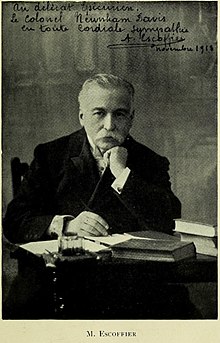
This is also the reason why cooking becomes an art that is dominated by men. In cooking schools throughout the western world, the faces that represent the food industry are men. The most notable Chefs are men and to study with them means to be acknowledged as a legitimate "food scientist." The European country that is most notable within this field is France. People like Marie-Antoine Careme and Auguste Escoffier get credit for innovating different aspects of the culinary field. One is referred to as the "King of Chefs" and the "Chef of Kings"(7) who was one of the main innovators in haute cuisine, where focus is placed upon the presentation and elaboration of food to be served to the upper society. The other is known as an exemplary chef, restaurateur, and culinary writer that is famous for adapting traditional french cooking techniques into a modern context. He is also known for further subdividing the kitchen by what is known as the brigade de cuisine system and introduced new cooking methods along with his recipes (8).  These two male figures are seen as geniuses in the history of  cooking. However, what is not given credit to are a few facts that must be taken into consideration that can easily put to question and/or dismiss the idea that Europe is the root of the culinary arts: 1) The travel of the Greek and Romans (ironically the same territory what would later become modern day France, Italy, and Greece who today are popularly known for the cuisine) into Egypt for education, 2) The Moorish establishment in Europe, which coincides with the European cooking innovations that can be traced back only after the medieval period, and 3) The travels taken during the colonial era by Europeans into Africa, Asia, and Latin America. These three major movements of contact, mostly of violent aims, with original people cannot be disregarded. They almost instantly influenced Europe in all sectors, of which included not only the new variety of foods, but the preparation, cooking, and storage of food. It is with this idea, that we start to uncover what MGT is for the original woman.

Auguste Escoffier
Feminists have failed to socially understand MGT, specifically through the aspect of cooking as a true art that only elevates the level of culture and refinement of a woman. And that puts her more in tune with her predominant feminine nature. This is where the MGT of the European goes wrong, whereas it is entirely understandable in the Japanese case due to the social status of the women. Geisha's were not looked to as inferior because their MGT was precisely to elevate the status of women that would be in misery otherwise. Because of the condition of the European woman, as MGT being something that was an obligation added to her oppressed reality as no more than a mere object, westernized original women have also rejected MGT.  To embrace it would mean to give up all the other aspects that society offers in acquiring preparation into a professional field of choice. It would simply mean giving up the change to be like-man by getting ready to cater and serve the husband to be. Western women, starting with the grafted, have reacted to the limitations set up by the white man by wanting an equality that is not in accord to their nature.  It is a false equality that is based in being like man and not one that accentuated and uniquely added to their womanhood. Meaning, that white women focused on getting rights and recognition so they could do and act exactly like white men, instead of fighting to extend the depth of their MGT schooling that could flower into other realms dealing with studies/activities associated with man.  This is a true building of oneself that deals with a proper equality with the traits that go in accordance to the Godly nature of Man. Western feminism has failed to nourish the feminine principle (being a lipstick lesbian is not enough) in a way that allows her to adequately contribute to the world with a proper freedom.

Only when you combine the 14th degree with an Original Black value system can you see its true worth for understanding how and what does the Original Black woman do. The number of the 14th degree itself, which we measure through Supreme Mathematics, the law and order of the universe, explains the process that women engage in when learning of their universal role, not something that is assigned by man. Man in the previous sentence is defined through what has been shown and proven by the social history of humanity through the onset of dissatisfaction as it was experienced by the original people themselves. This is manifested through the division and linear defining of all things, the inability to view gender through holistic lens where both the masculine and feminine principles are aligned with each other mathematically, but rather where one is placed above the other in an oppressive reality.  Man is thus being contextualized through the reductionist, linear and fragmented mind frame, which disrupts the harmony between man and nature. This is the only way where gender roles are not given, but naturally lived out by the black woman as they go in accordance with who man really is: Allah, the spark, the creator, the Black man.  In the supreme mathematics, 1 means Knowledge and 4 is Culture. Knowledge is an initial awareness, a thought that has not been given a shape or form, it lingers, until we delve deeper to explore it. Knowledge are also facts and information gathered throughout time by previous scientists, mathematicians, and historians. Culture is how we live our lives. It is constantly enriched by add in it the understanding(3) acquired through the application(2) of our knowledge(1). When the original woman starts to become aware of who she is and retraces this by learning herstory of the history, understanding her experiences and the interrelation(6) between her and man(7) she can then properly know how to add-on to her culture. It starts in the home, but extends outwardly. For man it starts outside, but reverts back to the home Islam. This is knowledging your culture.

Of course, women can develop themselves as scientists, mathematicians, writers, etc, but all of this must occur with a proper mental balance. An accurate conception of who they are, a foundational preparation, and a projection of the talents/skills they want to develop will allow an accurate process of women's contribution to society and the world. Currently, this is only possible on a micro level, where certain communities can provide the deeper teachings of woman, such as the Nation of God and Earth, as a stepping stone to her full realization. Or as we say, to take it from knowledge(1) to born(9).

As for myself these days I no longer think of the oppression my mother experienced, through the internalized European patriarchy of her husband, nor do I think about her inability to change that situation. It was precisely her undetected earthly nature that did not fight it. Nowadays, I welcome all aspects of MGT that can add to my growth. Food and cooking not only reveal how I can uniquely transform food for consumption, but how I present it, like or unlike others. This says a lot about who I am. Cooking also informs other talents, like writing, where sometimes you have a set plan of how to do it, other times you just freestyle especially when you are unfamiliar to the spices. Reaching physical, mental, and spiritual enlightenment through the practice of yoga is also connected to cooking. Through it, not only does one have the proper nutrients to engage in the training, but the way in which one expresses the asanas (postures), will give you clues as to their process of cooking.  What is unique to the way one cooks? All these things, eventually take me to a deeper place, where I want to learn about how to grow these fruits, vegetables and herbs. I also want to organize and work with women farmers of the world in saving seeds that might become extinct due to the genetic manipulation and dissemination worldwide by so-called green revolution authorities. Western society would call this ecology. If this is the case one of the areas I want to dwell more into is agriculture and ecology. In the end, I am applying who I am in what I do. MGT leads you and informs the original woman to what her contributions will be in the outside world.

Peace!


(1) Chandler, Wayne. Ancient Future.  Atlanta, Georgia: Black Classic Press, 1999. pg. 140.
(2) Shiva, Vandana. Staying Alive.  Brooklyn, New York: South End Press, 2010. pg. 96 and 104.
(3) Dissatisfaction as it is being used here, was a term coined by Elijah Muhammad to denote the birth of the climate that would bring forth the issues that will characterized Babylonian society.
(4)Zarattini, M. (Writer), Rendón, J. (Director). (1993). Episode 14 [Television Series Episode]. Rendón, J. (Producer), Corazón Salvaje. Mexico: Televisa. 
(5) Marshall, R. (Producer/Director). (2005).  Memoirs of a Geisha [Motion Picture].  United States: Columbia Pictures/Dreamworks.
(6) Zarattini, M. (Writer), Rendón, J. (Director). (1993). Episode 14 [Television Series Episode]. Rendón, J. (Producer), Corazón Salvaje. Mexico: Televisa. 
(7) Marie-Antoine Carême. (2011). Retrieved May 28, 2012 from http://en.wikipedia.org/wiki/Marie-Antoine_Carême
(8) Auguste Escoffier. (2011). Retrieved May 28, 2012 from http://en.wikipedia.org/wiki/Auguste_Escoffier


Wednesday, December 29, 2010

Moro de Habicuelas Negras

From Izayaa's Kitchen:

The origin of the word Moro originates in Spain. The Moorish “conquest” of Spain and other parts of Europe, brought with it an inevitable genetic takeover of the dominant Black people. Due to the dual reality that developed in Spain the custom of referring to the rice and beans as "moros y cristianos," referring to the "Moors" who were a civilized people from Africa that brought many amazing inventions, like libraries, universities, string music to Europe, and the Christians, who were the white Catholics descendants of the Caucasians, became common. Simply referring to the dish as “Moro” denotes that this dish was distinctly Moorish and was learned by the Spaniards. This Moorish dish is a very common recipe in the Caribbean & Latin America and it varies in form, depending on the process of cooking and the ingredients used. In Cuba this dish is called "Congri" with pieces of pork added to the mixture. In Central America the dish is known as "gallo pinto," and in the Dominican Republic (Quisqueya) is simply known as "Moro." It is the Dominican version of this dish that I will share with you.  You can make this recipe however you want, with any kinds of legumes. Legumes meaning any dried fruit produced in a carpel that opens along its sides. Different types of legumes include lentils, beans, peas, carob, and soy. This particular recipe will be presented made uniquely vegan, void of any meat or dairy ingredients, commonly associated with diseases like diabetes, asthma, high blood pressure, cholesterol, and even cancer.

Ingredients
  • 1 can of Organic Black Beans or 2 cups of boiled bag beans
  • 2 cups of Brown Jasmine Rice 
  • 1/4 tsp of annatto seeds
  • 1/3 diced green Italian pepper
  • 1/3 diced red onion
  • 2 garlic ears, mashed into a juicy mixture
  • 2 tablespoons of Adobo, Organic brand or your own mixture of Tumeric powder, Garlic powder, Salt
  • 1 pinch of Oregano
  • 1 pinch of black pepper
  • 1 pinch of apple cider vinegar
  • 1 teaspoon of tomato paste
  • 1 teaspoon of Soy Sauce (Tamari)
  • 1 bunch of cilantro
  • 2 tablespoons of cold-pressed Canola, Sunflower, or Safflower Oil
Preparation
  1. In a pot, place two tablespoons of Canola Oil, turn up fire and let oil heat.
  2. Once oil has heated, place the annatto seeds and allow to simmer until it releases its color and fragrance.  Remove quickly as oil can quickly become bitter. 
  3.  Place the diced onion, italian green pepper, and garlic into oil. Let heat for 1 minute, until garlic is a bit brown.
  4. Add Adobo, Oregano, black pepper, and the soy sace. Let these ingredients mix well with the rest.
  5. Add the cup of Black beans, lower the fire, close the pot, and let all ingredients mix for about 3 minutes.
  6. Open the pot and add 3 cups of Water, the tomato paste and vinegar. Mix well and close pot.  Let the water simmer.
  7. Once bubbling occurs, add rice. Mix all ingredients.  Make sure that the tomato paste dissolves.
  8. Close pot until water simmers. 
  9. Turn the fire low, add the cilantro on top of mixture, close the pot, and cook the rice and beans for about 45 minutes. 
  10. Open the pot, move the rice over, and close again.  Let the low fire cook the rice and beans for an additional 10 minutes.
  11. Serve the moro with anything you want.
  12. Don’t forget to enjoy your meal. Peace!

Thursday, December 9, 2010

Secondary Education in Quisqueya Part 1

Dominican education, specifically referring to the high school sector, has undergone an evolutionary change through the transcendence of many years by those in charge of making education reform. The decisions made by curriculum specialists in high school education are greatly influenced by the demands made; within the time education reform takes place, to achieve the satisfaction of the people and their needs. There are many different ways in which Dominican education at the high school level has been defined, but throughout the years the definition of this sector in education has solidified. In terms of the region that is known as Latin America and the Caribbean, which is part of the geographical area that the Dominican Republic is a part of, in 2001 this region affirmed that education has to be more than the teaching of specific subjects to adolescents. As they thought, education geared towards youth should be a preparation to the work/job they will embark in their lives and for their participation as citizens in their respective town/city within their nation. The concept of everyone receiving an equal education is very important because it gives great value to the public school system, which is the organism that promotes the philosophy. This way of looking at education promotes the passion to change the structure of the educational system with the goal of bettering it for the youth. For this reason,

“The option to incite new and flexible forms of learning will serve as an answer to the adolescents and young people living in poverty and marginalized communities, who tend to abandon formal education because they have not attained access to good quality education” (1).

Defining Secondary Education 
Education personnel have been aiming towards a new form of pedagogy. In search of this new identity, the question “what is Dominican education?” has to be is defined. Other questions such as, “what is the basis of Dominican education?,” “What’s its purpose and how will it educate and prepare the youth?” These questions could be answered once a concrete understanding of education's meaning and practice has been attained. Furthermore, once educators are able to distinctly provide pedagogical practices and aims for each level of education, one has a wider perspective of the overall workings of the education sector within the island.

In keeping with the later proposition, current basic education provides the tools to youth so that in high school they are able to understand and analyze topics or problems that are of a higher thinking order. Throughout the four years of high school, focus is shifted to learning how to build, do, and live. These coincide with the teachings of the Nation of God and Earth, particularly within the 12 Jewels of Islam, truly summative words that provides us with simple words that express how to think, how to live, and the elements that we must master so that they refine this way of Truth both outside and inside the devil's civilization. The first three jewels (1.Knowledge, 2.Wisdom, 3. Understanding) gives one the tools of how to gain and contextualize ideas, the other three jewels (4. Freedom or Culture, 5. Justice, 6. Equality), express how what is understood by the individual is applied in one's life, which is the culture that we live.  Through the liberation of our mind, attaining the understanding of who and where we are, the principles of freedom, justice, and equality are attained to further a culture in its most supreme form. A freedom that is guided by ridding ourselves of the manifestation of devilishment within and outside of us while adapting a set of ethical codes that are only relevant to God and Earth, so that one is able to move the culture rightly and exactly. It is then that an Equality can be reached again in terms of living within the Earth, using all of the useful land, where we have access and can roam freely without the perils of the once unequal capitalist oppression, while each universe's (black family) shares their "variation" and level of seeing and living the culture. With Justice being naturally served, original civilizations must take shape once again by incorporating the fundamentals, which are 7.Food, 8. Clothing, 9. Shelter. This reality is one that can only be deepened by an endless propellment of 10.Love, 11.Peace, and 12. Happiness. These are the jewels of a true offering in rebuilding ourselves after the death of illusion and devilishment. And even if the illusion has not yet seized after its expiration date, this process of life after the devil, can be applied within the spaces of heaven we make within this Babylonian reality. After emancipation, it was Booker T. Washington who took it upon himself to hustle one of the most successful industrial schools in the United States. With the purpose of serving true justice to his people he freed former slaves from physical and mental bondage. They would no longer depend on "massa," if they could build their own food, clothing, and shelter. Thus, making a space of love, peace, and happiness as best as they could in the devil dominated nation.

In the Dominican case, however, but very much like the African-American case, the reality of attaining self-sustainability is within the confines of the devil's conditioning and imperialist modifications within the island.  They need to make sure that at least every Dominican can do for self when left even in the worst impoverished conditions. This means that the intensity and effectiveness of Dominican education is really a result of Capitalism, Imperialism, and Globalization. Using this framework, High school requires students to use their intelligence, what they've learned, and  how to apply it to their subjects, their lives and within the society at large. Although Dominican education is in a process of reform and change, it has always maintained the purpose of keeping students in educational environments where they are prepared for: higher education, to work/get a job, and for a productive and responsible citizenship (2). Based on this ideology of education, one can say that high school education is:

“Every formal and informal educational offer essentially oriented towards adolescents and youth, that aims at consolidating and amplifying the four pillars of education throughout life, and that according to the normative actual process, it initiates once the person has accumulated at least eight years of basic schooling” (3).

Every Dominican is capable of acquiring a superior education, work productively, and be a citizen adaptable to changes within a society that is in constant evolution. It is particularly a good trait to have had more than eight years of schooling. As a matter of fact, it is encouraged that kids be schooled from the time they are 3 years old. The earlier instruction takes place, the easier it is to mold the characteristics that will allow a person to thrive in Dominican society. This is achieved both through formal and informal educational methods. This means that the person must partly go through educational experiences that are ascribed to a pedagogical institution as well as through experienced knowledge. Once finished with high school, students are able to matriculate in universities and colleges to specialize in a field. It is very common to go into one specialty upon entering college. Once students have passed all required exams and other forms of assessments, they can start looking for employment in their fields. This specialization could not have been achieved without going through eight years of basic schooling.

Basic schooling is the period before high school. Elementary education prepares the individual to learn the main components that will allow them to flourish in more complex educational environments. During elementary school students are gaining the tools and preparation to advance intellectually. This is a time where teachers focus heavily on the teaching of skills, through a very demanding, but efficient educational practice. For example, in order for a student to write a sentence they first need to understand the different parts of the sentence, such as the noun, verb, and the adverb. In the future, this will help the student to express intricate ideas to the point where they attain the capacity of writing books. Therefore, teachers will have students dissect sentences to the point where a student can become experts at manipulating the language, and become superb writers. At the high school level, students are then ready for the more difficult language activities, which might include an analytical paper. This is where the students own thoughts can start to be manifested.

The Structure of the High School Educational System
Within the high school education system of the island, there are existing organisms with different responsibilities. All these components, working together, assemble the educational structure and depend on one another to carry out the pedagogical processes. The outline is as follows:


Administrative Organisms
The varying educational bodies can be divided into two sectors that interconnect to make education a reality. These are the administrative organisms, in charge of processing and managing partnerships with the government, containing general information on jobs, pedagogical tools, and schools. Under the administrative organisms are the institutions that deal with carrying out the educational operations. These organisms are responsible for the way the school runs, the culture of the school, the teaching, and all the other facets that surround the everyday life in the schools. Within the administration, The Board of Education is the overarching educational institution in the country. New legislation, modifications and changes to the educational structure are formed as well as distributed by this institution. All the varying levels and departments are under the board. The office of liberal arts and arts education oversees all issues relating to the public high schools (not polytechnic institutes) within the country. One of the main responsibilities of this organism is to develop and implement the curriculum for the educational programs in the liberal arts and the specific forms of art (4). This track of education requires that students continue their academic occupation at an institution of higher learning (university or college) where they can study a career of choice. The Office of General High School Education also supervises the Office of Technical/Professional education, whose main purpose is to increase and accommodate those centers dedicated to technical preparation. The study of commerce, seamstress, mechanics, electronics, and other technical specialties are offered to students who want industrial jobs and a university/college education is not mandatory. However, there are those students who do go on to college with the goal of furthering their specialization or to attain a Bachelor’s in addition to their technical studies.

Operative Organisms
The regional educational office is in charge of overseeing the functions of the different school districts. Every regional office monitors the activities carried out by the district offices in the area of that regional educational office. There are about seventeen regional offices in the country (5). District offices are grouped depending on their region. If they are in the same town, then the same regional office oversees them. Anything that has to do with the school system, such as the infrastructure, hygiene, the curriculum, and other related topics, are taken care of by the regional office. The types of schools that the districts manage are both private and public with students gaining a general education. The district offices also manage the polytechnic institutes that are under the same region.

Polytechnic Institutes
The establishment of polytechnic institutes has a specific history. The growth of these institutes is strongly tied to the rapid industrialization within the country due to the influences of external forces (U.S.A), and the need for the country to catch up to the first world.  Generally, Dominicans who want to continue their education beyond high school attend an institution of higher learning and go directly into studying that specific profession. Polytechnic institutes formed with the purpose of attaining a specialized instruction in a technical/professional field.  The level of depth covered in the study of a technical career varies depending on what position one wants to attain in the working world. For example, an introductory computer course prepares a person to become familiar with the computer system.While a computer engineer has become specialized in all aspects of the computer.Not only is the engineer aware of how programs are installed and how they function, but they can also put an entire computer together. Computer courses have a limit on how much a person learns about the machine. There are about 187 technical centers where people in the island can receive technical instruction (5). One hundred and thirty of those centers offer more than one technical specialty. Similarly to high school, the polytechnic could be private or public.

The rapid formation of polytechnic institutes in the Dominican Republic did not come about until the 70s, a time where there was a drastic growth in the industrial sector.It wasn’t until this time that new machinery (far more technologically advanced) were brought into the country’s industrial sector. The growth in this sector brought in a high demand for manual labor. This means that more people were needed to work under the new system of productivity. However, the industrial growth of the country demanded that qualified people, in technical and vocational fields be permitted to work in the industrial sector.

By 1980, a law called “Ley 116”(6) was created by the Technical-Professional National Institute (INFOTEP)(7)precisely to meet the selection criteria of the industrial sector for those seeking employment. This institution made it possible for youth and adults to obtain a practical education if they wanted to pursue this field of work. A year after its construction, this polytechnic institute served many Dominicans through its course offerings and other educational activities. From the time of INFOTEP’s opening until recently, the institute has served more than one million people (8).This entity continues to serve Dominicans on a daily basis to prepare those that want to get technical/vocational education.


----------------------------------------------------------
(1)Amargos, Oscar (Coordinador). “Panorama de la Educación Secundaria en República Dominicana 2003.” Secretaria de Estado de Educación: Santo Domingo, 2003. pg. 4
(2)Ibid, 5.
(3)Ibid, 7.
(4) Liberal arts refers to a general course of study, without a focus on any subject in particular.  A student studying Liberal art engages in coursework which includes a specific art (paint, dance, singing), sociology, history, physics, chemistry.  It is not a curriculum based on specializing people in any trade or study.
(5) Ibid, 8.
(6) Ibid, 9. 
(7)“Ley 116” makes it legal and initiates the process of the first politechnic institute in the country.
(8) Ibid, 11.
(9)Ibid.